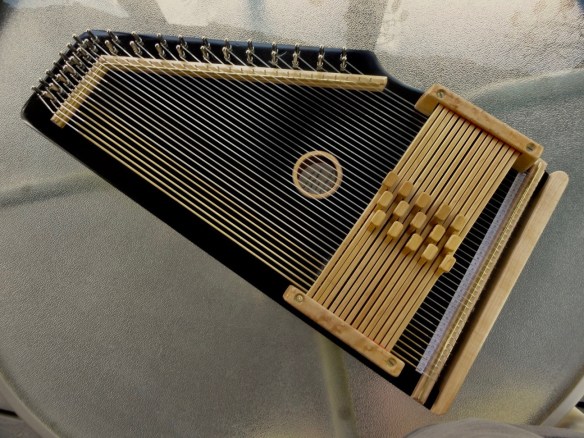
Thirty-seven string G/D diatonic with fifteen chord bars. The spruce top and laminated maple body are lacquered black. The bars and bridges are maple.
Marsha’s newest autoharp is a thirty seven string, G/D diatonic with fifteen chord bars. We often travel to music festivals and jam sessions and wanted an instrument that is lighter and could tolerate rough transport, camping, and weather. It’s not very different from all of our other instruments but my main reason for building it is for international travel.
Traveling across international borders with a musical instrument is problematic these days. Many species of wood and other natural materials are protected from possible extinction by CITES, a multilateral treaty that restricts the trade and transportation of endangered flora and fauna. It is now illegal to transport many of the exotic wood species used in musical instruments across international borders. Travelers may be blocked from entering (or returning), fined, or have their instrument confiscated. Even very old instruments that were made before the treaty’s enactment are subject to action unless their content and year of manufacture can be validated.
I have always used exotic woods to build many of my instruments, being careful to purchase only certified sustainable stock from licensed mills. I can build and travel without guilt but not without fear. How can I expect border agents in Canada or customs control in Europe to recognize the difference between protected and sustainable wood species? Can they tell the difference between synthetics or ivory and pearl? Because I do not want to risk confiscation or worse, I am only going to cross borders with instruments that I have made with domestic North American woods such as the maple and spruce I used for our new travel autoharp.
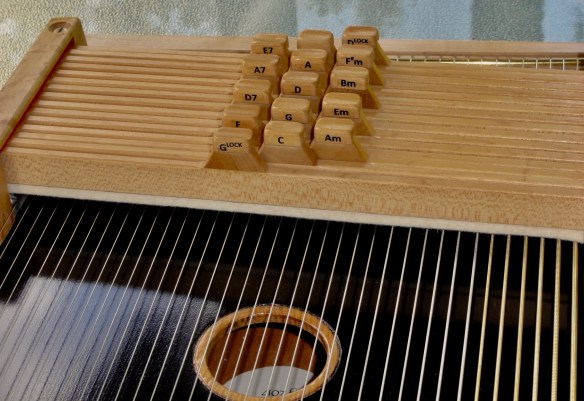
The setup is diatonic in the keys of “G” and “D”. An added “F” chord and a minor change to the string schedule allows play in the additional key of “C”. The “G” and “D” lock bars have not been completed.
The rumors and horror stories are scary. Touring concert musicians have had their violins confiscated because of the ebony fingerboards. Vintage guitars have been held because of rosewood, bone, and pearl content. Most travelers cross without a hitch but some have a lot of esplainin’ to do. Why take the risk? We should leave our expensive, beloved instruments at home and travel with a safe serviceable instrument made with domestic materials.
 Fret Or Fret Not
You must be logged in to post a comment.