Nearly two years ago I received a commission from a multi-instrumentalist in Nashville Tennessee. We were to invent a unique new instrument based upon the Marxophone.
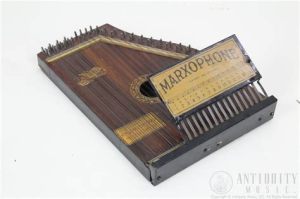 The Phonoharp Company’s Marxophone was an early 20th century fretless zither that was played with a system of spring steel hammers. The instrument played two octaves in the key of C. Typically, the right hand would play paired melody strings with the individual hammers and the left hand would strum four sets of accompanying chords. A single tap of a hammer would produce a single note. By holding the hammer down, the hammer would bounce on the string pair producing a mandolin type tremolo.
The musician wanted an instrument with this unique sound for his session work and the movies that he scores. For me, this was an engaging creative challenge combining my autoharp and hammered dulcimer knowledge with designs and materials I have never before contemplated.
 Unlike the Marxophone, this instrument was to have no chords, only the hammered melody strings. While the Marxophone had two octaves tuned to a diatonic scale in the key of C, this instrument has three octaves tuned chromatically from C3 to C6. Being diatonic, the Marxophone had a single row of “keys”. This chromatic instrument has two rows set up somewhat like a piano keyboard with the bottom row for the naturals and the top row for the sharps.
Designing this from scratch without extant examples was a challenge to say the least. The construction of the body was much like building a large heavy autoharp. Laying out the string array involved the spacing of sixty-four strings so that the keys would be comfortable to play and the brute wouldn’t be too large to handle. It was necessary to keep the speaking length of C6 (from bridge to bridge) around eight inches to prevent breakage at that pitch, and eighteen inches was determined to be the optimum length for the longer bass strings, again to keep the instrument a more manageable size.
Scale calculations were preformed by the string maker, Greg Schreiber. Pitch and string length are considered when calculating the optimal diameter and tension for each note. The string pairs from C4 to C6 are plain wire. The bass octave, C3 to B3, is single wound strings designed with windings only between the bridges. With the average string tension of the 64 strings being 45 pounds, the total tension that the structure must bear is 2795 pounds.
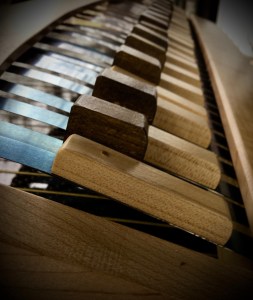 Oh My!…. now the hammers….designing them was the most difficult tedious issue here involving countless hours of “trial and error” to achieve the desirable degree of “bounce” and a more consistent feel between the two rows of keys. Coils and coils of spring steel were evaluated for their flexibility and resiliance. Dozens and dozens of hammers died in the quest to success. A complete two octave prototype instrument was sent to the musician for evaluation. Sound files were sent and finally the problem of bounce was solved.
 The hammer heads are slices of 5/8″ oak rod. The full length of spring steel for each hammer is 3/8″ wide by .005″ thick. Five thousands inch thick spring steel of this width is so flexible that it makes me think….. “thick foil”. To remedy some of the droop, it’s reinforced underneath by a section of .008 that is terminated just beyond the key.
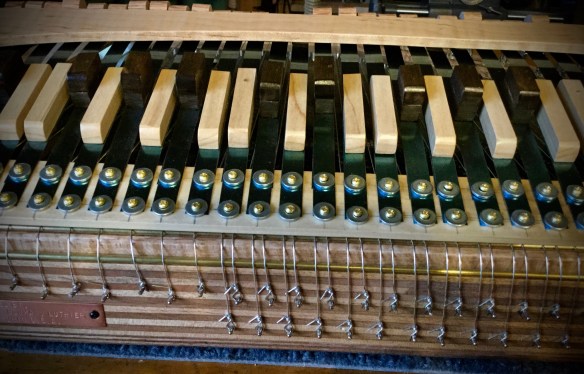
The hammers are mounted on a rail near the anchor end of the body. Two screws secure each hammer and allow for alignment with its string course. The flexible hammers are mounted at an angle that permits the head to swing freely between the string course and the upper stop bar. The underside of the stop bar is padded with two layers of felt to suppress the noise as each hammer bounces up.
 The strong, one piece maple pinblock frame is backed with 6mm Okoume plywood. A carbon fiber soundboard has a (pun alert!) striking appearance as well as sound. The sides, bridges, covers, keys, and trim are curly soft maple.
About The “Cryptoclavier” Name
 The musician is invested in cryptocurrency, particularly in Bitcoin. A clavier is a keyboard instrument with strings.
In addition to the many domestic and international venues where he performs, he hopes to entertain at cryptocurrency events. Embedded in the sides of Cryptoclavier are two Bitcoin medallions showing both front and back sides.
 The back side reveals a QR-code. To show their appreciation, event participants can scan and tip with Bitcoin.
This has been a challenging and fascinating collaboration with a creative multi-instrumentalist. I for one will be listening to movie scores and watching for YouTube videos hoping to hear this unique, one-of-a-kind Cryptoclavier.
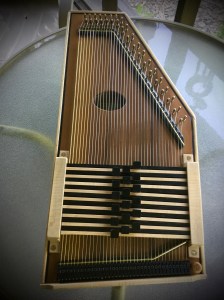 My latest commission comes from an autoharp musician/aficionado from New York State requesting a much deeper instrument with more resonance and a richer tone. Early planning was for a three inch depth but we finally settled on a depth of 2-1/2 inches to make an instrument you could really wrap your arms around. The working title became “ED”, standing for extra dimension.
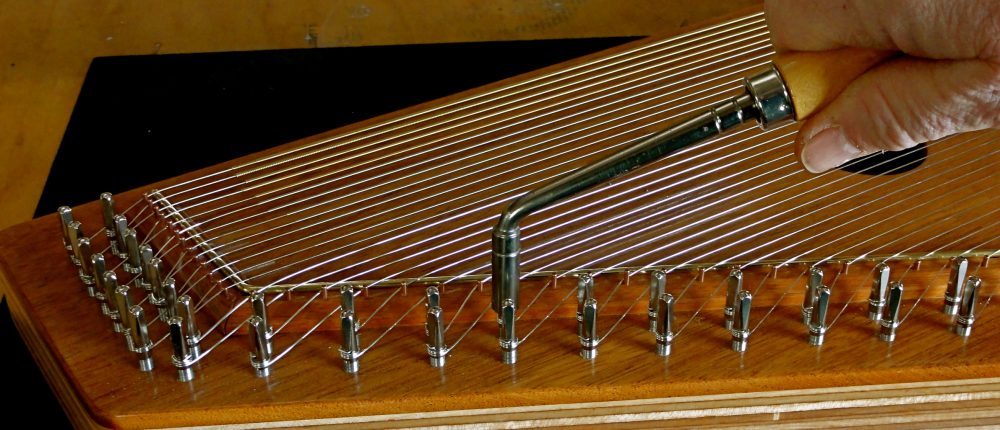
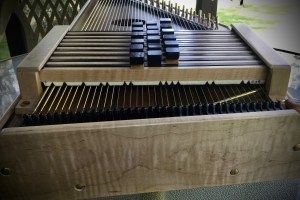 I began with my standard, one piece, pinblock frame which was extended in length to accommodate eighteen chords, an angled anchor bridge, and Daigle fine tuners. I added a 3/4 inch thick spruce spacer around the underside of the frame before attaching the soundboard, laminated back, and curly maple side veneer.
 Players with a shorter reach than this musician might find it difficult to play this deeper autoharp comfortably. To make the instrument narrower, I built it without the curved treble side that usually adds an inch of width. That, with lower chord bar covers, makes it easier to reach the buttons with the left hand.
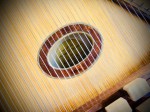
 The solid cedar soundboard features an oval soundhole to round out the rich tone. The benefit of this deeper body with its larger internal capacity is greater volume and longer sustain.
 Having thirty-seven strings, this autoharp is set up in the single diatonic key of A. The eighteen chord bars are alternating natural maple and painted black. The musician wanted, of course, the chords in the key of A but also alternative chords that would have an ethereal feeling. For this he sought the advice of Jo Ann Smith who designs expert chord layouts and charts for cutting each individual chord. Ordinarily, a single key can be covered nicely with eight or ten chords. This instrument has fifteen chords with three additional blank bars to be cut when determined later.
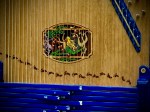
 The solid spruce soundboard is colored with a blue aniline dye and decorated with a self adhesive overlay that features two dolphins leaping from the sea. The painted chord bars are profiled to resemble waves and the curly maple trim is dyed to match.
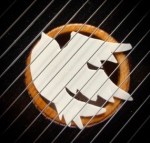
 The Okoume laminated back is painted using fish net as a stencil. A small soundhole/carry hole is decorated with a sort of alien jellyfish.
 The happy owner, Rene St. Aubin, collected his new instrument at The Mountain Laurel Autoharp Gathering which takes place each year at a university in Shippensburg, Pennsylvania. An exciting feature of the Gathering is the MLAG Autoharp Championship Contest. US and international autoharp musicians travel there to compete in this juried competition. This year Rene was a contender.
 Here is a custom autoharp commissioned by a Michigan based musician who is also an Oscar Schmidt dealer. Her Etsy site, WellsPlace, features customized new and used autoharps, therapy harps and autoharp parts and accessories.
 Her new personal instrument is a thirty-seven string two key diatonic in the keys of C and G. The fifteen maple chord bars alternate in colors from natural to stained maple.
 A laser cut rosette trims the soundhole. The dragonfly is, to date, the most popular choice and has appeared on more than a dozen of my instruments.
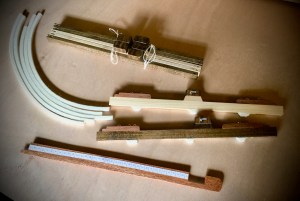 Included are C and G lock bars that can be swapped into the array as needed. The four blank chord bars and extra felt can be cut for additional chords as needed.
 This conversion is a pristine Oscar Schmidt model B with the chord bars removed. Because the new tuning schedule differs from the standard chromatic scale, a new schedule was calculated and a string set made for the precise diameters and tensions of each pitch.
 The poplar soundboard and eight chord bars are colored burgundy with black for the remaining components. The finish is completed with several coats of satin lacquer.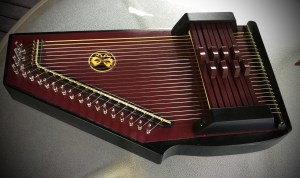
 A laser cut soundhole rosette is colored to resemble the Philodice butterfly that she uses as an online icon and identity.
 This twenty-three string diatonic in the keys of G and D is tuned from A3 to D6.
 Eight chord bars are carried upon combs with Delrin bases and #6 steel pins. This is an improvement over the slotted holders used in the past.
 It’s been some time since I weighed in on this kinda hybrid weblog/website. Weblogs beg frequent entries and websites contain information and the mechanics of the biz. I have been remiss in both. The daily statistics, when I check them, have been heartening and I truly appreciate the many visits. I have kept up with the frequent requests for information and advice but haven’t had a lot of new content to post about my work.
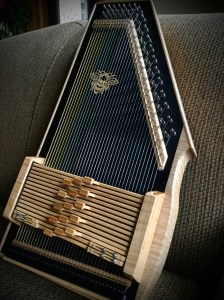 I built this F/C diatonic for a musician in New York state whose mother, by coincidence, resides here in Darke County. It was so nice that she traveled here to take delivery as it’s not often that I meet my clients face-to-face.
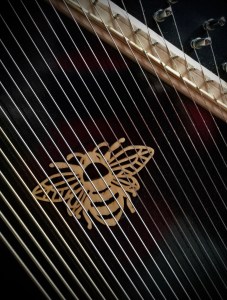 The musician’s name means “bee” so she requested and choose a bee as a soundboard rosette. As luck would have it, Etsy had a laser cut bee ornament of the appropriate size.
 Thirteen chords with two lock bars cover this two key arrangement. This “Bowers” setup has the majors in the center row, minors in the bottom row, and sevenths (+sus) in the top row.
 Daigle fine tuners with an onboard fine tuning wrench complete this very nice instrument.
 The swarmandal is a plucked box zither of Indian origin and used as an accompanying instrument for the vocal classical music of Northern India. Modern swarmandals are similar to western zithers in shape and construction. In fact, autoharps with the chord bars removed are sometimes used as an equivalent instrument in India today.
 The strings are played open. According to the musician, for a given raga he will mute some notes and re-tune some strings. He does this on-the-fly (imagine doing this between autoharp tunes!). To change the instrument’s setup between ragas, we arrived at the idea of a combination of fine tuners and lock bars.
 The lock bars of an autoharp function much like their adjoining chord bars… held aloft by springs when not in use and locked down by some sort of a wedge. The swarmandal’s lock bars will be swapped in and out as needed and seated, without springs, against the strings by a magnetic cover.
 The bars are made of curly maple and felted in combinations of single and double notes. There are only seven notes in the scale but only six different notes will be muted since the keynote, Eb, will always be open. Six different bars are sufficient but I made an additional six bars with double notes.
 Autoharp chord/lock bars reside on the ‘harp and are seldom removed unless they need attention. The swarmandal’s lock bars will be constantly swapped in and out. To protect the fragile felt blocks I made a case to house the twelve+ bars and included extra felt for future wear.
 I included my usual tuning strip/duster that can be temporarily inserted underneath the strings as a guide for tuning. The strings are mostly in pairs and tuned to only seven notes. The notes are labeled on the strip and lock bars according to the Indian Solfeggio system….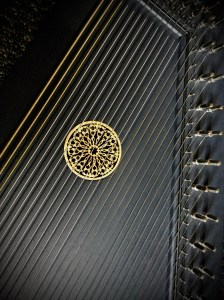
 Along the way I have made a couple of improvements on my “Child ‘Harps”. I had been making slotted chord bar holders by cutting down the manufactured plastic holders once produced by Oscar Schmidt. These work well but are a bit noisy when the wooden bars “clack” against the hard plastic. My newer Child ‘Harps now have the quieter Delrin and steel pin combs as on my standard sized autoharps.
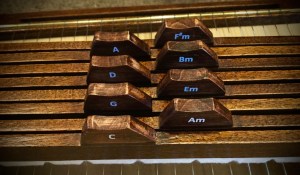 Child ‘Harps have carried seven chords in two rows. I now offer eight chords. Here is the G/D diatonic version.
 As with the Child ‘Harps’ larger siblings, laser cut sound hole rosettes are popular. there is a variety of styles available in this smaller size for this smaller autoharp.
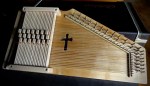
 A more recent build is this thirty-six string, fifteen chord chromatic I built for a gentleman just beginning his autoharp journey. His preferences included a Celtic cross sound hole rosette, an all black finish, and a salvaged OS tuning label at the anchor end.
 This instrument resembles the old black model A autoharps of the past but features all of my modern improvements for tone, volume, stability, and play ability.
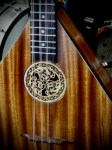
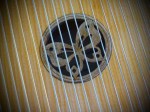
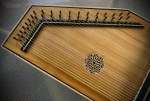
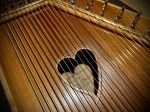
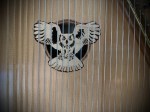
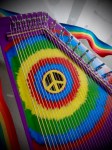
 Apertures (sound holes) in stringed musical instruments have been studied, experimented with, and designed for a variety of acoustic functions and characteristics. While a sound hole’s size, shape, and position certainly influence tone and volume, its appearance is what catches the eye and creates a kind of identity.









 Fret Or Fret Not
You must be logged in to post a comment.