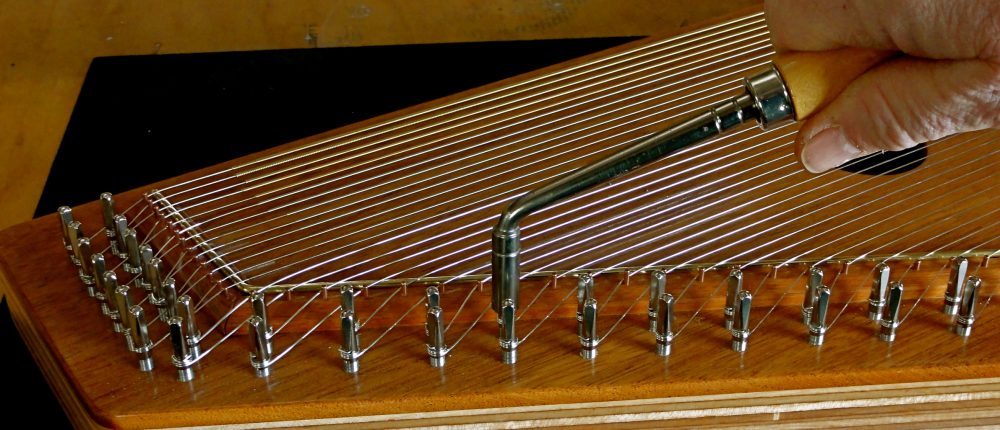
 Here is a custom autoharp commissioned by a Michigan based musician who is also an Oscar Schmidt dealer. Her Etsy site, WellsPlace, features customized new and used autoharps, therapy harps and autoharp parts and accessories.
She plays this with her other diatonic and chromatic autoharps in worship services. A Schreiber electromagnetic pickup, concealed beneath the chord bars, conducts the joyful sounds loud and clear.
 Her new personal instrument is a thirty-seven string two key diatonic in the keys of C and G. The fifteen maple chord bars alternate in colors from natural to stained maple.
Dark stained bridges contrast with the spruce soundboard, curly maple chord bar holders, and side trim.
 A laser cut rosette trims the soundhole. The dragonfly is, to date, the most popular choice and has appeared on more than a dozen of my instruments.
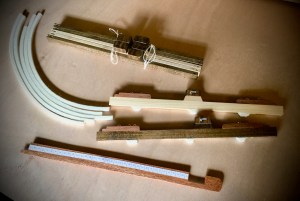 Included are C and G lock bars that can be swapped into the array as needed. The four blank chord bars and extra felt can be cut for additional chords as needed.
The wooden strip/duster can be inserted beneath the strings as a tuning guide.
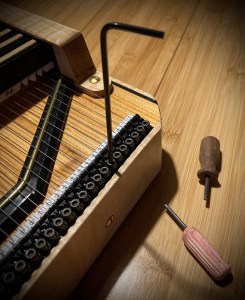 Hex screws are components of autoharp fine tuners. They are adjusted with some form of a hex key that is usually supplied with the assembly. This necessary implement is usually stored in the case, pick bag, or somewhere in that room you just walked into but forgot why.
 …………..where it’s right at hand for quick tuning touch ups.
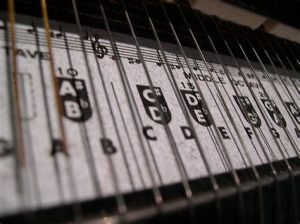 Many autoharps, especially manufactured ones, have decals, stickers, or note labels to designate the pitch of each string. These are unsightly and mostly unnecessary once the autoharp has attained a stable tuning. Some musicians convert their instruments to an alternative tuning such as a diatonic setup with a completely different tuning schedule that is no longer supported by the existing labels.
 I printed a tuning chart that I glued to a thin strip of wood. This can be slipped under the strings when needed as a reference for tuning each string.
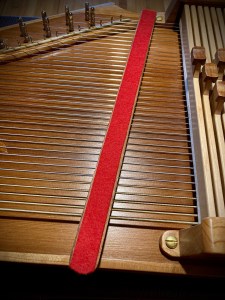 On the reverse side of the tuning strip is red felt. It prevents the wooden strip from scratching the soundboard and doubles as a convenient tool to remove dust under the strings.
 Fret Or Fret Not
You must be logged in to post a comment.